






by
Ashley Nicholls | Associate Director, CHPK Services Engineering
In the modern built environment, efficiency isn’t just about cutting costs, it’s about creating buildings that are intelligent, adaptive, and responsive to the needs of both occupants and operators. At CHPK Group, our Services Engineering division is pioneering the integration of smart building systems that elevate operational performance, sustainability, and occupant experience.
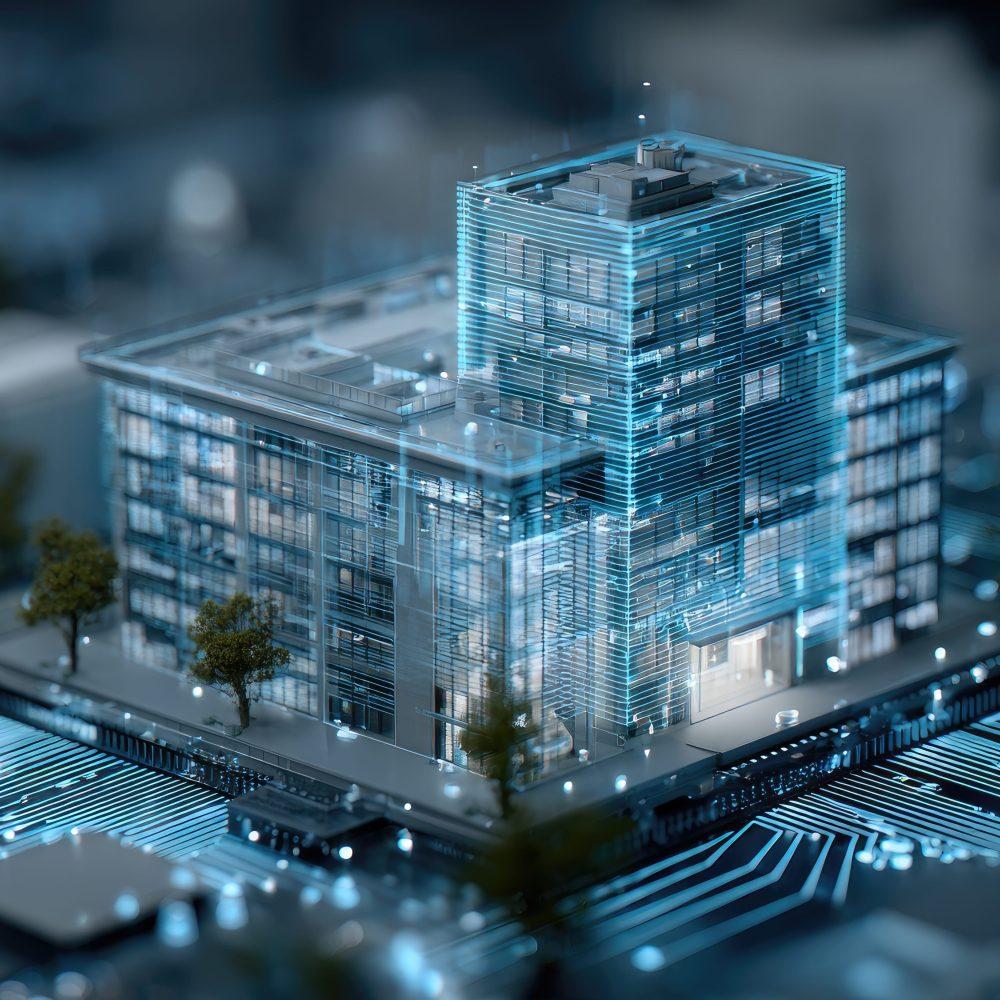
Smart buildings are more than high-tech concepts; they are data-driven ecosystems. By combining IoT-enabled sensors, building automation platforms, and advanced analytics, these systems continuously monitor and optimize building operations. Energy consumption, air quality, lighting, and HVAC performance are no longer reactive management tasks and they are dynamically managed in real time. The result? Buildings that think, adapt, and operate at peak efficiency.
Consider energy management. Traditional buildings often operate on static schedules, leading to unnecessary energy use and inflated costs. Smart systems, however, can respond to occupancy patterns, weather changes, and equipment performance automatically. Lights dim when rooms are empty, HVAC adjusts to the optimal comfort level, and energy waste is minimized all without human intervention. It’s efficiency that doesn’t compromise comfort.
Operational efficiency extends beyond energy beyond monitoring and potential energy savings. Predictive maintenance is transforming the way building systems are managed. Instead of waiting for a failure, data analytics from digital monitoring can flag early signs of wear and lead to scheduling repairs proactively and extend the life of critical equipment. This proactive approach reduces downtime, lowers maintenance costs, and keeps buildings running smoothly, because in today’s fast-paced environments, interruptions aren’t just inconvenient; they’re costly.
At CHPK Group, we take a holistic approach to services engineering. Every smart building initiative begins with a deep understanding of a client’s operational goals and infrastructure. We design and implement solutions that align technology with strategy, delivering measurable improvements while avoiding overcomplication. Our systems are scalable, flexible, and built to evolve as the organization grows.
But the benefits of smart buildings extend beyond operational metrics—they enhance the human experience. Intelligent environmental controls, improved air quality, and adaptive lighting contribute to wellbeing, productivity, and satisfaction. In workplaces, public facilities, and commercial spaces, these factors are increasingly central to attracting and retaining talent, engaging visitors, and demonstrating a commitment to health and sustainability.
Smart building systems are more than technical upgrades—they are strategic enablers. By leveraging data, automation, and analytics, our Services Engineering team helps organizations transform buildings into assets that work smarter, not harder. Every sensor, every automated control, and every predictive insight is an investment in operational excellence, cost efficiency, and long-term sustainability.
Furthermore in today society occupants are becoming more energy conscious and it’s our role as the technical professionals to educate occupants on efficient running of MEP services in the context of their lives or operations. Occupant-led feedback loops recognise that day-to-day energy consumption in HVAC, lighting and small power systems is strongly influenced by user behaviour. Actions such as adjusting temperature setpoints, operating windows, switching lights, or leaving equipment on directly affect operational energy use. By providing timely and understandable feedback on how these actions influence energy demand and comfort, occupants are encouraged to modify behaviour in ways that reduce waste while maintaining acceptable indoor conditions. When feedback is immediate and relatable, buildings tend to operate closer to their design intent, delivering measurable reductions in energy use without relying on technical interventions.
For non-technical occupants, effective feedback is delivered through simple, intuitive display techniques rather than raw data. Visual cues such as colour-coded indicators, comparative benchmarks (e.g. today versus typical use), and clear cause-and-effect messages help users interpret their energy use quickly. Translating energy data into familiar terms and pairing it with gentle, actionable prompts enables occupants to understand the impact of everyday choices, fostering energy-aware behaviour and supporting ongoing improvements in operational energy efficiency.
At CHPK Group, we’re not just building smarter systems, we’re shaping the future of operational efficiency. In a world where technology, sustainability, and human experience converge, smart buildings are the ultimate expression of what’s possible when engineering meets innovation. The question is no longer if your building can operate smarter, it’s how it will.